
Launching your own streetwear clothing brand has never been so accessible: no need for stock or large quantities to get started. In our workshop in Paris 20e, we support designers releasing their first collection. Here is what makes the difference.
3 French streetwear brands that started with small runs
Almost all the big French streetwear brands started small: a few items, a recognisable style and a community. Three telling examples:
- Pigalle: founded in 2008 in Paris by Stéphane Ashpool, first as a shop in the 9th arrondissement, then a brand that won an ANDAM award and opened a shop in Tokyo in 2015. What worked: its roots in a neighbourhood and basketball.
- Avnier: launched in 2014 by Orelsan and Sébastian Strappazzon; the name comes from “avant-dernier” (French for “second to last”). What worked: simple, functional pieces, worn by an already loyal community.
- Drôle de Monsieur: founded in 2014 by Dany Dos Santos and Maxime Schwab, with no fashion-design training, around an embroidered phrase that became their signature (“Not From Paris Madame”). What worked: a short message, repeated on every piece.
What they have in common: a short first run, a strong visual and quality pieces. That is exactly what small-run printing makes possible: create your first pieces from just 1 item, or ask for a quote for your first drop.
They trusted us: Biotherm, New Balance.
1. A clear identity
A name, a logo and a world that are recognisable at a glance. Before printing, ask yourself three questions: who are you talking to, what message do you carry, and which visual sums it up? A simple identity is then easy to carry across T-shirts, hoodies, caps and tote bags.
2. Clothes people want
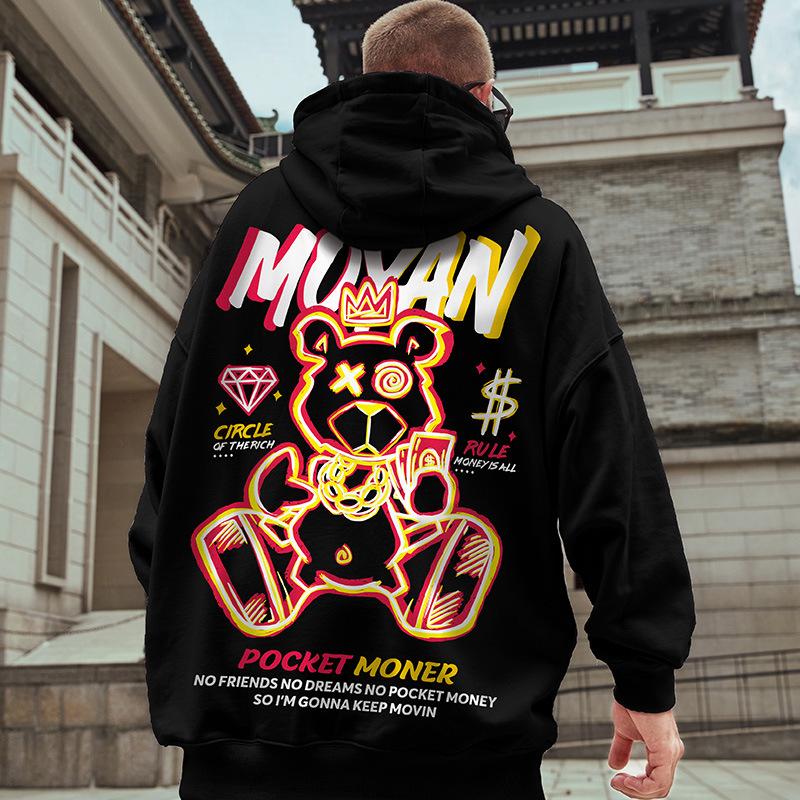
Streetwear is all about fabric and cut. A heavyweight oversize T-shirt (220 to 300 g) or a 440 g heavyweight hoodie instantly gives a “brand” look. Order one piece of each style to compare before launching the run.
3. The right printing technique
DTF transfer prints your visuals in colour, with gradients and fine details, from 1 item: ideal for testing and for small runs. Embroidery gives a premium look on a left-chest logo or a cap, and screen printing becomes the most economical for large quantities; these two techniques are by quote. See our printing techniques.
4. Start small, grow fast
Launch a first drop of a few dozen pieces, see what sells, then restock. At Printtex, you order from 1 item and the price goes down with quantity: no dead stock, no unnecessary risk.
5. A fair price
Work out your cost price (garment, printing, packaging, delivery), then set a price that fits your world. Our prices are shown online, and we make a tailored quote for your runs.
Your brand with Printtex
We print your collections in our workshop in Paris 20e: advice on fabrics and technique, a first item to check the result, premium small runs without stock, free collection from the workshop or delivery anywhere in France. You must hold the rights to the visuals you send us.
Launching your brand? Request a small-run quote, or test your visual by customising a first piece online.
6. The key pieces of a streetwear brand
- 440 g heavyweight boxy hoodie: the signature piece, loose cut and heavy fleece.
- Heavyweight oversize T-shirt or extra heavyweight 280 g: the T-shirt that hangs well.
- Washed zip hoodie: the much-sought-after vintage effect.
- Cap and tote bag: the accessories that complete the drop at a low price.
7. The schedule of a first drop
- Week 1: finalise the logo and 2 or 3 visuals.
- Week 2: order one piece of each style to check the result, colours and sizes.
- Week 3: photos of the pieces worn, pre-sales to your community.
- Week 4: launch the run, then restock what sells best.
8. Where to sell your streetwear clothing?
Your social networks (pre-sales, behind the scenes, try-ons), a simple online shop, pop-up stores and designer markets, concerts and festivals (see festival merch). Start where your community already is.
9. The paperwork, without drowning in it
Three things are enough to sell your first pieces properly. An available name: check it in the INPI trademark database before printing anything, then register it online (ten years of protection, renewable) as soon as you are sure you are keeping it. A status: a micro-business can be set up online in a few days and is enough for a first drop; you will change legal form when volumes justify it. Visuals whose rights you hold: no borrowed logo, character or photo, even “modified”. The rest (website, social networks, accounting) falls into place as sales come in.
10. The label and mandatory information
A garment sold in France must state its composition in French (for example “100 % coton”), and it is customary to add the size and care instructions. You have two ways to do this under your own name: a woven label sewn into the collar, or a label printed directly inside the collar, lighter and seamless. We tell you, model by model, what is possible on the chosen garment: ask for it in your brand quote. Think about your packaging too: a simple bag and a thank-you card make more impact than a box that costs as much as the T-shirt.
11. Clean files and great photos
A professional result starts with the file: your visual as a PNG at actual print size, on a transparent background, with sharp edges; the customisation tool shows you its exact position and size on the garment, and we check every file before printing. Keep the same position and size across the whole collection: that is what gives the impression of a brand, not a series of T-shirts. To sell, photograph each piece the same way (worn and flat, same light, same background): your visitors compare your pages with each other, not with those of the big brands.
Frequently asked questions
How much does it take to launch a streetwear clothing brand?
Much less than before: with printing from 1 item, you test your designs without stock. Your budget mainly depends on the number of styles and pieces in the first drop.
Do I have to order large quantities?
No. Start with a few dozen pieces, then restock as sales come in, with the same style and the same file.
Which technique for a streetwear brand?
DTF printing for colour visuals and small runs, embroidery for a premium logo, screen printing for large quantities. Everything is detailed on our page create your clothing brand.
Should I register my brand before the first drop?
At the very least, check that the name is available before printing. The registration itself can be done just before going on sale; it protects your name for ten years and saves you from having to reprint everything.
What must the label of a garment sold in France state?
The fabric composition in French, and in practice the size and care instructions. It can be woven and sewn in, or printed inside the collar under your name.
Can I order a single item to test?
Yes, from 1 item. It is the right way to check the result, the fabric and the cut before launching the run.
Ready to launch your first run? See our page create your clothing brand.
Share:
How to choose the right textile for custom printing?